
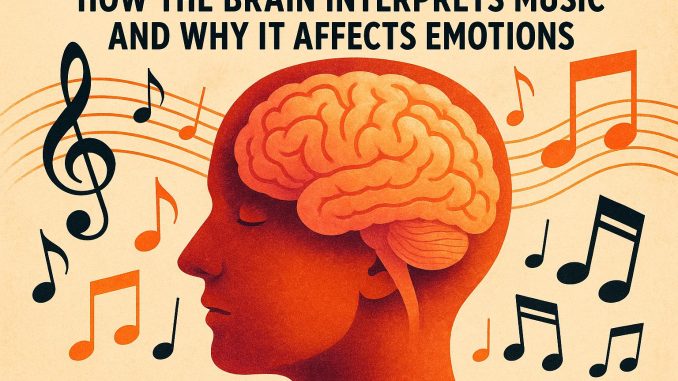
Understanding the Brain’s Response to Music
Music is a universal language that possesses the unique capability of evoking a diverse range of emotions and responses in individuals across different cultures and backgrounds. It has an extraordinary influence on our emotional state, cognition, and even physical well-being. To fully appreciate the effects of music on our emotions, it is essential to delve into the fascinating ways in which the brain processes musical stimuli and its profound implications on both our mental and physical health.
The Auditory Pathway
The journey of music within the human brain begins with the auditory pathway. This is the complex route followed by sound waves as they are transformed into electrical signals interpretable by the brain. When sound waves first strike the ear, they are captured by the outer ear and channeled down the ear canal to impact the eardrum. These vibrations are then transferred to the cochlea, a spiral-shaped organ in the inner ear responsible for the conversion of sound vibrations into electrical impulses.
The cochlea’s role is vital, as it is equipped with tiny hair cells that execute this conversion. From here, these electrical impulses are carried via the auditory nerve to the brainstem. At the brainstem, preliminary processing transpires before the signals proceed to higher-order brain regions for more detailed analysis.
The Role of the Temporal Lobe
The temporal lobe is a significant brain region implicated in processing the auditory information that enters through the ear. Within this lobe lies the auditory cortex, which plays a pivotal role in the perception and interpretation of sound. This specialized area is responsible for discerning musical components such as pitch, rhythm, harmony, and melody. It aids in the brain’s ability to make nuanced distinctions necessary for the appreciation of complex musical pieces, contributing to our overall auditory experience.
Furthermore, the temporal lobe doesn’t work in isolation. It interacts with other brain regions to enhance perception by integrating sensory information and facilitating a comprehensive musical experience. This cooperative endeavor allows us to not only hear but also feel and understand music on multiple levels.
Music, Memories, and Emotions
Music’s ability to evoke strong emotional responses is deeply rooted in its interaction with the brain’s limbic system. This system comprises interconnected structures that regulate emotions and memory, making it an integral player in the brain’s response to music. Two key structures within this system, the amygdala and hippocampus, are instrumental in this regard.
The Amygdala
The amygdala has a crucial role in the processing and mediation of emotions, particularly those tied to fear and pleasure. It is responsive to the emotional content of music, triggering emotional reactions that can be instantaneous and intense. This rapid response mechanism is why certain pieces of music can promptly invoke feelings of happiness, melancholy, or nostalgia, creating a significant emotional connection between the listener and the music.
The Hippocampus
The hippocampus, known for its role in memory formation and retrieval, also engages actively during musical experiences. Music is often tied to significant life events, rendering it a powerful cue for recalling memories. When individuals hear songs associated with particular moments in their lives, the hippocampus aids in recalling these events, linking them to the emotional states experienced during the original moment. This deep bond between music and memory serves to reinforce the emotional impact music can have.
Dopamine Release and Reward
The positive emotional experience associated with listening to music is largely connected to its ability to stimulate the brain’s reward system. Music can lead to the release of dopamine, a neurotransmitter that is heavily involved in the brain’s reward circuitry and associated with feelings of pleasure and satisfaction.
The Ventral Striatum
Within the brain’s reward circuit, the ventral striatum plays a critical role. It becomes active in response to pleasurable stimuli, including enjoyable music. This activation is often accompanied by physiological responses such as ‘chills’ or ‘goosebumps’ during peak moments of musical enjoyment. The association between dopamine release and music can enhance mood, improve motivation, and increase feelings of well-being, showcasing the potent effect of music on the brain’s reward mechanisms.
Music Therapy and Emotional Health
Given the profound psychological impact of music, it’s no surprise that it is also utilized in therapeutic contexts to promote emotional and physical health. Music therapy is an established field that draws on music’s potential to improve emotional well-being and address various mental health challenges.
Applications in Clinical Settings
In clinical settings, music therapy is applied in numerous ways to bolster patient care. It is particularly effective in pain management, cognitive function enhancement, and fostering social interactions. Patients engaged in music therapy may experience increased relaxation, improved mood, and opportunities for emotional expression. These therapeutic benefits can substantially support mental health, offering non-invasive means of treatment across different patient populations.
Conclusion
The intricate processes through which the brain evaluates and reacts to music underscore the profound connection between music and emotions. These revelations not only enhance our theoretical understanding but have practical implications in fields such as neuroscience and therapy. As research progresses in exploring these fascinating aspects of musical perception, our comprehension of music’s influence on the brain and its potential as a powerful therapeutic tool will continue to expand, affirming music’s intrinsic value in human life. The continued exploration of music’s impact on the brain promises to unlock further potentials, from therapeutic advancements to enriching our daily emotional lives.