
Introduction
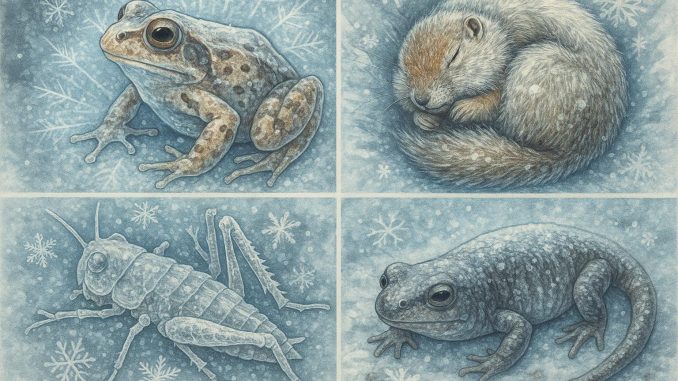
In the expanses of our planet, where the environment can be both a cradle and a crucible for life, certain organisms exhibit remarkable adaptations to survive. Among these is the captivating ability of some animals to endure freezing temperatures, a phenomenon known as cryoprotection. This ability highlights one of nature’s most ingenious solutions to surviving climates that would otherwise be lethal for most living beings.
The Science Behind Freezing Survival
Understanding how animals survive such harsh conditions requires an exploration of the underlying mechanisms. This is a process where biology meets chemistry, engaging strategies that defy our standard understanding of life processes. When temperatures descend below freezing, many life forms face cellular damage due to ice formation. However, various species have developed extraordinary methods to counteract these extreme challenges.
Antifreeze Proteins
Central to the sub-zero survival mechanism is the role of antifreeze proteins (AFPs). These proteins serve as molecular guardians, inhibiting the growth and recrystallization of ice. Found in diverse organisms, from Antarctic fish dwelling in icy waters to certain insects, AFPs bind to microscopic ice crystals preventing them from enlarging. This mechanism ensures that even as the external environment becomes a frozen expanse, the internal cellular milieu remains hospitable.
Natural Cryoprotectants
Parallel to the function of antifreeze proteins is the role of cryoprotectants, substances that significantly lower the freezing point of bodily fluids. Some animals produce substances like glucose and glycerol, which not only reduce the freezing point but also contribute to maintaining cellular integrity during freeze-thaw cycles. By managing fluid balance and guarding cellular structures, these cryoprotectants allow organisms to withstand the rigors of freezing and thawing repeatedly without sustaining damage.
Controlled Ice Formation
In a fascinating twist to frost-bound survival, certain species opt for regulated ice formation. Rather than avoiding ice at all costs, these organisms manage where and how ice forms. The wood frog, for example, permits its body to freeze around core organs while ensuring critical systems remain insulated. Through essential compounds that halt intracellular ice formation, these organisms emerge unscathed after their lengthy cryonic state, ready to resume life with the return of warmer temperatures.
Examples of Animals Capable of Surviving Freezing
The sheer diversity in adaptation strategies demonstrates the resilience and resourcefulness of life in harsh climates.
Wood Frog: The wood frog (Lithobates sylvaticus) exemplifies resilience, withstanding freezing solid in its natural habitat across North America. Accumulating glucose in its tissue, it uses this sugar not just as an energy source but as a protective agent against intracellular ice.
Arctic Woolly Bear Caterpillar: This caterpillar survives the unforgiving Arctic winters by amassing glycerol, effectively entering a freeze-thaw cycle over several years. Only after enduring multiple seasonal transformations does it complete its lifecycle, emerging as a moth.
Painted Turtle Hatchlings: The hatchlings of the painted turtle (Chrysemys picta) illustrate survival through biochemical and physiological adaptations that align with their surrounding environment. By permitting external ice formation while protecting vital internal systems, they emerge when conditions become favorable.
Conclusion
The natural world’s ability to adapt to extreme climates is both a wonder and a testament to evolutionary ingenuity. Through innovations like antifreeze proteins, cryoprotectants, and regulated ice formation, life finds ways to persist where it would otherwise falter. Understanding these processes not only reveals the marvels of biological resilience but also offers insights that could pave the way toward applications in biotechnology and medicine. Should you wish to delve deeper into this topic, reputable resources from scientific research institutions, such as the National Geographic’s Animal section, offer a wealth of information for further discovery.